Lighting a Spring-Fed Garden Pond for Evening Ambience: Inspiring Ideas
October 30, 2026 - Inspiration


October 29, 2026 - Design

October 28, 2026 - Sources
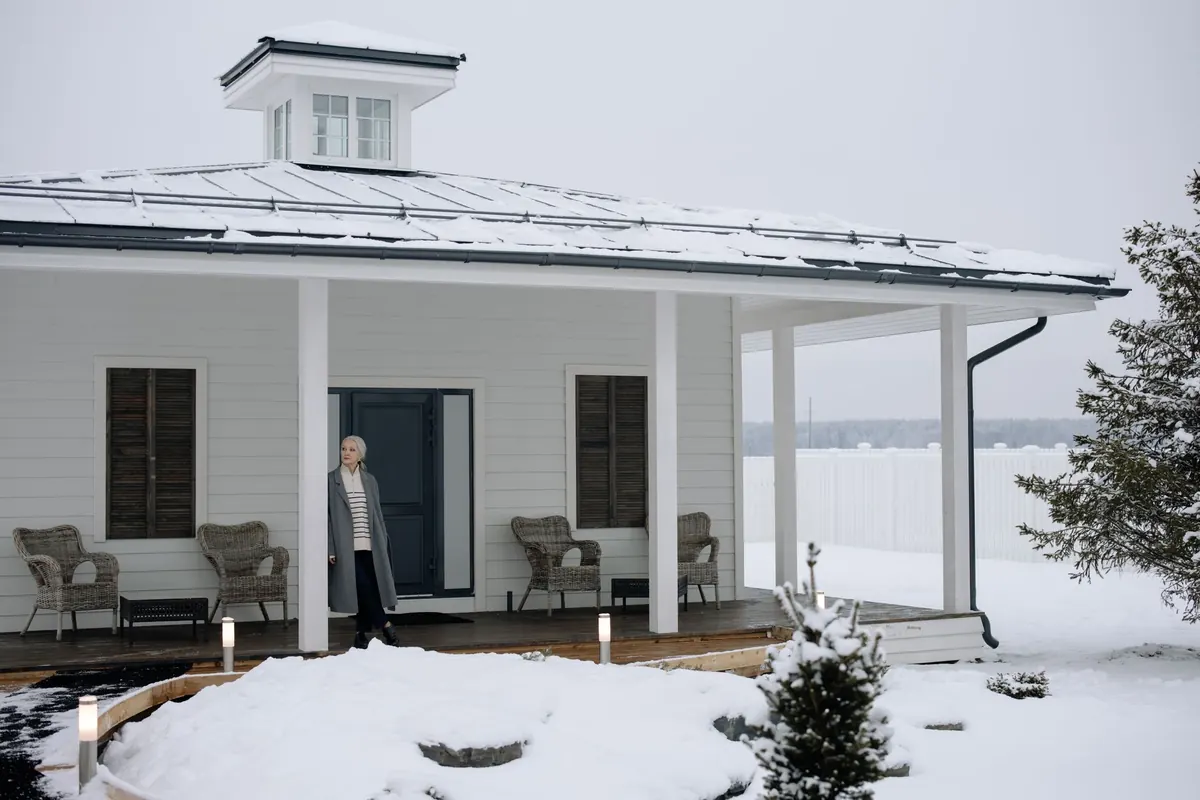
Covered porches earn their keep in spring. They give you a dry place to stand while the rain comes down, somewhere to shed wet boots, a sheltered spot for the first coffee of the day. That same shelter, though, creates awkward conditions for anything electrical hanging overhead: humid air that lingers long after the shower passes, splash coming up off the steps, and a ceiling that stays cool and damp for hours.
By the time you notice a light is dim or flickering, water has usually been at work for a while. A slow, thorough pass over the porch once a year — ideally before the wettest weeks rather than after — keeps fixtures working, keeps the steps visible on dark evenings, and keeps small problems from turning into replacements.
Pick a wet evening and turn on every porch light at once: the ceiling fixture, the sconces beside the door, the step lights, whatever lantern hangs in the corner. Then walk the approach the way a guest would — from the driveway, up the path, onto the top step, through the door.
What you are looking for is contrast. Is there a pool of light where the key goes into the lock, or is the handle in shadow while the wall behind it glows? Do the steps read as steps, or as one grey mass? Does any fixture throw glare straight into your eyes? Glare is worse in mist, because droplets in the air scatter light back at you.
Carry a notepad and write down specific problems rather than “porch is dark.” Flicker, a dead bulb, two fixtures that no longer match in colour, a rust bloom on a screw head — each has a different fix, and the list becomes your work order for a dry Saturday.
Then repeat the walk in daylight with the lights off. Different faults show up: cracked glass, a sagging bracket, a gasket hanging loose, caulk that has pulled away from the wall.
A porch roof keeps off the worst of it, but rain arrives sideways. Wind-driven drizzle, splash from a wet path and plain condensation all reach the fittings.
Weep holes exist for a reason. Do not paint over them, and do not fill them with caulk while you are sealing everything else. Shades should be open at the bottom; a cup-shaped shade facing upward is a rain gauge. If a particular shade pools water after every storm, change its angle slightly or replace it with one that sheds. Keep lamp holders pointing down wherever the design allows.
Spring is when corrosion becomes visible, because the metal has spent months going from wet to dry and back again. What you find tells you what to do.
Aluminium shows a white, powdery bloom and pitting. Rinse it, dry it thoroughly, then apply a thin coat of wax or a corrosion inhibitor made for aluminium. Skip steel wool: fragments embed in the surface and rust there.
Steel and cast iron bleed rust from welds, seams and screw heads. Sand the spot lightly, treat it, and touch up with metal paint before the stain reaches stone or render, where it is far harder to remove.
Brass and copper develop a green film that is a natural, protective patina and often looks right on an older porch. Watch where it runs, though — it stains pale masonry. A clear lacquer can slow the process, but only on thoroughly dry metal; applied over damp brass it traps moisture and makes things worse.
The weakest point on most porch fixtures is the lampholder. A corroded socket shell means poor contact, heat, flicker and lamps that fail early. On a screw-in socket the swap is cheap and quick. If the socket is integrated into a sealed housing, replacing the fixture is usually the sane choice.
Humidity is the quiet enemy. It creeps into enclosed glass, condenses on the coolest surface — usually the lamp itself — and drips back onto the socket. Over a season, that cycle does more damage than any single downpour.
Choose lamps rated for damp locations where the manufacturer offers that information, and check whether a lamp is approved for enclosed fittings before you put it behind glass. LEDs run cooler than incandescent lamps, which means less thermal cycling and less condensation, but they vary in how well they tolerate trapped heat. Frosted or diffused lamps are worth considering on a porch: wet air scatters light, so a bare, bright source becomes a glare bomb, while a diffused one stays comfortable.
If a fixture flickers, try a different lamp before blaming the wiring. Dimmers and LEDs do not always agree, and cold, humid conditions rarely improve the relationship.
Switch off at the breaker before touching anything, and leave the inside of junction boxes alone if you are not confident. Call a licensed electrician if you find water inside a box or housing, scorched or discoloured insulation, a socket that is hot to the touch, a GFCI device that trips repeatedly, or wiring that crumbles when moved. Ground-fault protection on outdoor circuits is not a place for guesswork — if the porch circuit is not protected, that is a job for a professional.
Visibility on a rainy evening is less about total brightness than about where the light lands. Three modest layers will beat one strong fixture every time.
Keep cool white light off the porch; in mist it reads flat and cold
Photo: cottonbro studio / Pexels

A practical, low-glare guide to lighting a spring-fed pond after dark: where to place fixtures, how to catch moving...
A practical layout guide for building a reading corner around a swing-arm wall lamp, from chair placement and lamp...
October 29, 2026 - Design
October 28, 2026 - Sources
Copyright © 2026 Fari Della Sorgente. All Right Reserved.